
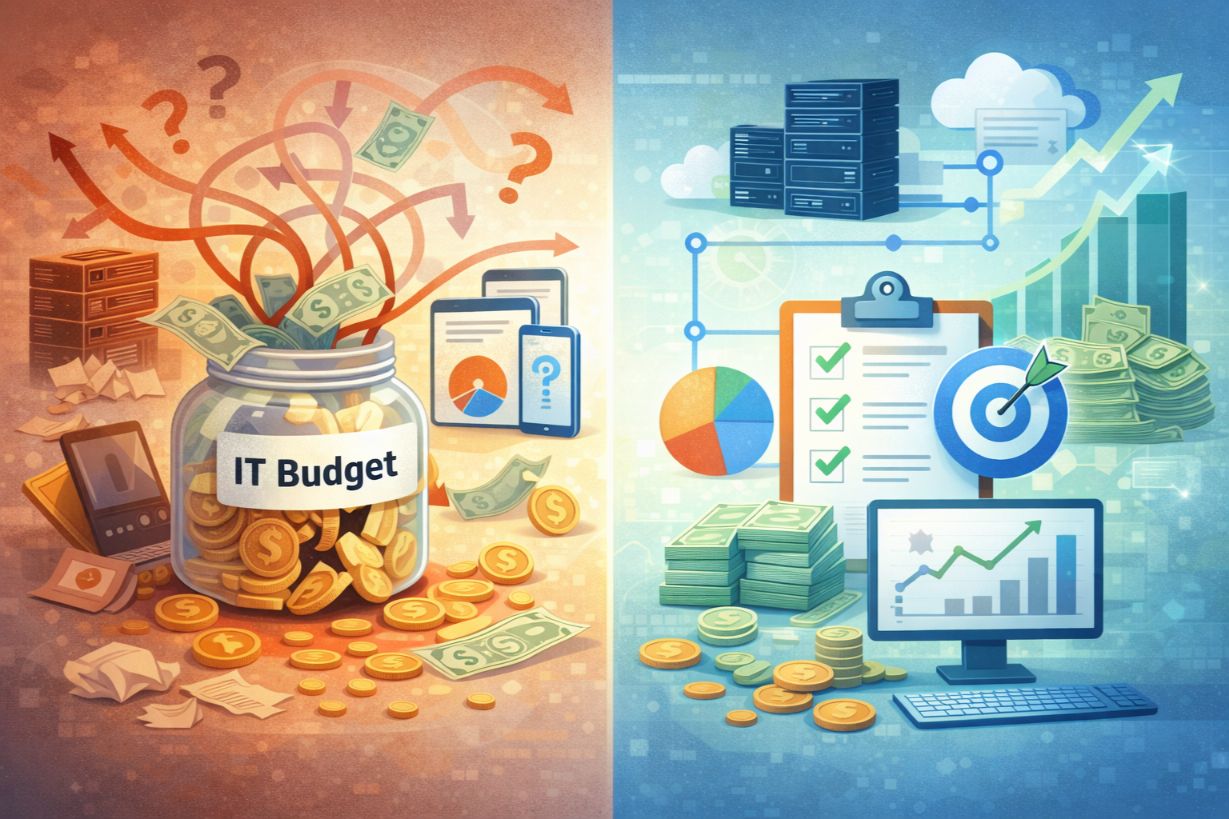
Why SMBs Waste IT Budgets Without a Clear Technology Investment Strategy
Technology spending should fuel growth — not drain budgets.
Yet many SMBs invest in:
- Software they barely use
- Tools that don’t integrate
- Platforms purchased reactively
- Technology that never delivers ROI
The problem isn’t that SMBs spend too little or too much on IT.
It’s that they spend without a clear technology investment strategy.
In this article, we’ll explain why unmanaged IT spending leads to waste, and how SMBs can align technology investments with real business outcomes.
Why IT Spending Feels Out of Control for Many SMBs
Common complaints include:
- “Our IT costs keep rising”
- “We’re paying for tools no one uses”
- “Every department buys its own software”
Without strategy, IT spending becomes fragmented and reactive.
What Is an IT Investment Strategy?
An IT investment strategy defines:
- Why technology is purchased
- How it supports business goals
- When investments are made
- How success is measured
It transforms IT from a cost center into a value driver.
The Cost of Reactive Technology Spending
1. Tool Sprawl
Departments buy tools independently, leading to:
- Duplicate functionality
- Integration challenges
- Higher support costs
2. Low Adoption
Technology without change management results in:
- Shelfware
- Frustrated employees
- Wasted licenses
3. Poor ROI Visibility
Without metrics:
- Success can’t be measured
- Bad investments repeat
4. Increased Risk
Unplanned tools often:
- Bypass security review
- Create compliance gaps
Aligning IT Investments With Business Objectives
Every investment should map to a goal such as:
- Revenue growth
- Cost reduction
- Risk mitigation
- Productivity improvement
If the connection isn’t clear — don’t buy it.
From Projects to Portfolios: A Smarter Approach
Instead of isolated purchases, SMBs should manage:
- IT portfolios aligned to outcomes
- Roadmaps that sequence investments
- Budgets tied to value delivery
This creates discipline and predictability.
The Role of ROI in IT Decision-Making
ROI doesn’t always mean direct revenue.
Valid ROI includes:
- Time saved
- Errors reduced
- Downtime avoided
- Risk lowered
If ROI can’t be articulated, the investment is suspect.
Balancing Innovation and Stability
SMBs must invest in:
- Innovation (automation, analytics, AI)
- Stability (security, infrastructure, continuity)
A strong strategy balances both — not one at the expense of the other.
How Digital Transformation Fails Without Investment Discipline
Transformation initiatives fail when:
- Too many tools are introduced
- Budgets are exhausted early
- No outcomes are defined
Strategy ensures transformation delivers value — not fatigue.
The CFO’s Role in IT Investment Strategy
Finance leaders bring:
- Cost discipline
- ROI analysis
- Budget forecasting
When IT and finance collaborate, spending improves dramatically.
How vCIO and Managed IT Services Help Control IT Spend
Strategic IT partners help SMBs:
- Build technology roadmaps
- Prioritize investments
- Eliminate redundant tools
- Forecast costs
This brings enterprise-level planning to SMB budgets.
Real-World Example: From Chaos to Control
An SMB:
- Uses 40+ SaaS tools
- Struggles with integration
- Sees rising costs
After implementing an IT investment strategy:
- Tool count drops
- Costs stabilize
- Adoption improves
- ROI becomes measurable
Strategy replaces chaos.
Common SMB IT Investment Mistakes
❌ Buying Tools Without Business Owners
❌ Measuring Success Too Late
❌ Ignoring Ongoing Costs
❌ Treating IT as a Necessary Evil
Strategic planning prevents all four.
How SMBs Can Build an IT Investment Strategy
Step 1: Define Business Priorities
Step 2: Inventory Current Technology
Step 3: Identify Gaps and Redundancies
Step 4: Build a Phased Roadmap
Step 5: Measure and Review Regularly
Clarity drives confidence.
Future Trends in SMB IT Investment
Emerging trends include:
- Outcome-based IT budgeting
- Subscription consolidation
- AI-assisted investment planning
Smart spending will become a competitive advantage.
Strategy Turns Spend Into Value
Technology alone doesn’t create results.
For SMBs, a clear IT investment strategy:
- Reduces waste
- Improves ROI
- Controls risk
- Supports growth
When IT spending is intentional, technology becomes leverage — not liability.
Unsure whether your technology investments are delivering real value?
Schedule an IT investment review to identify waste, risks, and optimization opportunities.