
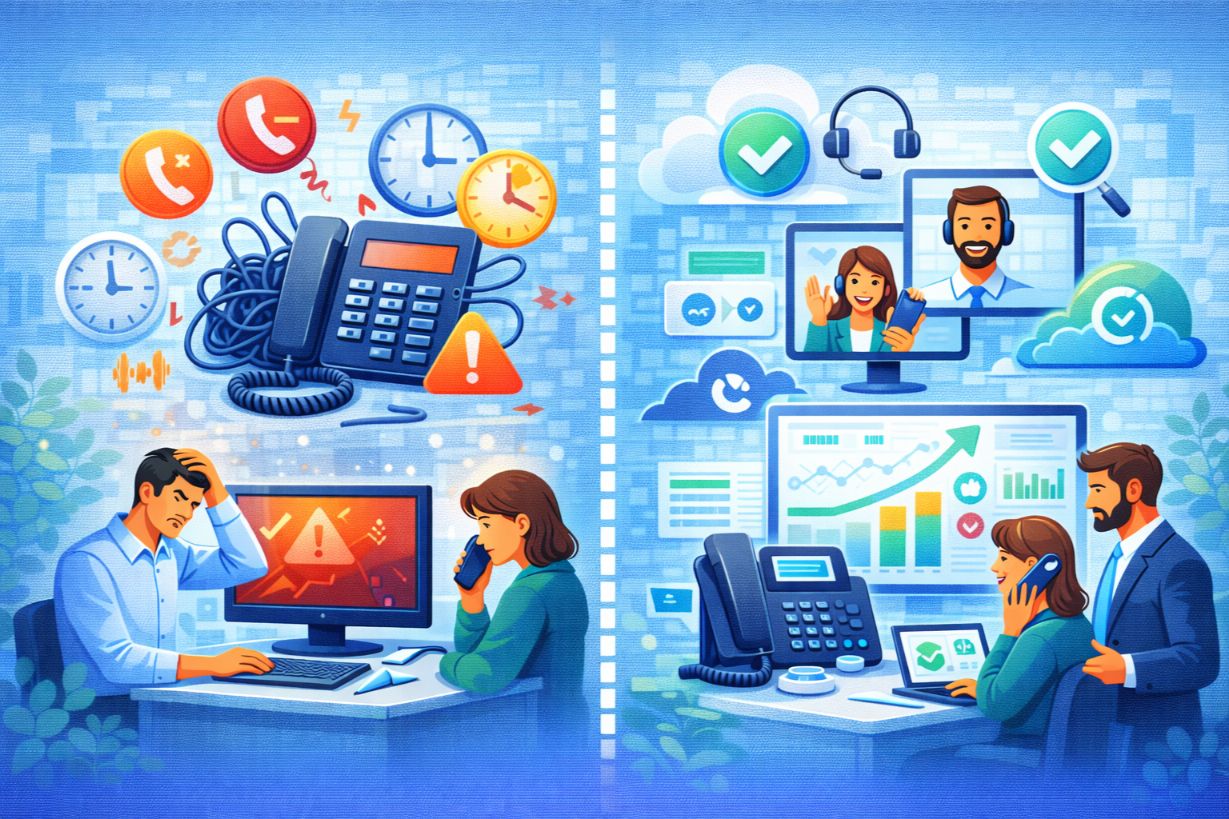
Why Outdated Business Phone Systems Are Hurting SMB Customer Experience
When customers call your business, that interaction shapes their entire perception of your brand.
Unfortunately, many SMBs still rely on outdated business phone systems that:
- Drop calls
- Route customers incorrectly
- Lack visibility and analytics
- Frustrate employees
In today’s always-on world, poor communication technology doesn’t just inconvenience customers — it costs business.
In this article, we’ll explore why legacy phone systems are holding SMBs back, and how modern communication platforms dramatically improve customer experience and internal productivity.
Why Phone Systems Still Matter in a Digital World
Email, chat, and social media are important — but the phone remains critical.
Customers call when:
- Issues are urgent
- They need reassurance
- They want real-time answers
A bad phone experience often leads to lost trust and lost revenue.
The Hidden Problems with Legacy Phone Systems
Outdated phone systems create issues SMBs often accept as “normal.”
1. Missed and Dropped Calls
Legacy systems:
- Lack call routing intelligence
- Depend on physical hardware
- Struggle with remote users
Missed calls mean missed opportunities.
2. Poor Customer Routing
Without intelligent routing:
- Customers get transferred repeatedly
- Calls go to voicemail unnecessarily
- Issues take longer to resolve
This frustrates customers and employees alike.
3. No Visibility into Call Performance
Legacy systems offer little insight into:
- Call volume
- Wait times
- Missed calls
Without data, improvement is guesswork.
4. Limited Support for Remote Work
Desk-bound systems:
- Tie employees to physical locations
- Break down in hybrid environments
Modern work requires mobility.
What Modern Business Phone Systems Look Like
Modern systems are cloud-based, software-driven, and fully integrated.
Key capabilities include:
- VoIP calling
- Intelligent call routing
- Mobile and desktop apps
- Voicemail-to-email
- Call analytics
Everything works from anywhere.
How Modern Phone Systems Improve Customer Experience
Faster Response Times
Intelligent routing sends calls to the right person immediately.
Consistent Service
Cloud platforms ensure calls reach staff whether they’re in-office or remote.
Professional Experience
Features like auto-attendants and call queues create a polished impression.
Data-Driven Improvement
Analytics reveal bottlenecks and staffing needs.
Unified Communications: Beyond the Phone
Modern phone systems are part of unified communications (UC).
UC integrates:
- Voice
- Video
- Messaging
- Collaboration
This eliminates tool sprawl and improves efficiency.
VoIP and Cost Savings for SMBs
Cloud phone systems reduce:
- Hardware costs
- Maintenance expenses
- Long-distance charges
Pricing is predictable and scalable.
Security and Reliability in Modern Systems
Cloud communication platforms offer:
- Built-in redundancy
- Encryption
- Disaster recovery
They often outperform on-prem systems in uptime.
Integrating Phone Systems with Business Applications
Modern platforms integrate with:
- CRM systems
- Help desk tools
- Analytics platforms
This provides context for every customer interaction.
Common Myths About Upgrading Phone Systems
❌ “Our Current System Works Fine”
Customers may disagree.
❌ “Migration Will Be Disruptive”
Modern migrations are staged and seamless.
❌ “Cloud Phones Aren’t Reliable”
Cloud reliability often exceeds on-prem.
Real-World Example: CX Transformation Through Modernization
A 25-employee services firm:
- Misses calls during peak hours
- Struggles with remote staff
After upgrading:
- Call handling improves
- Customer satisfaction increases
- Team productivity rises
The phone system becomes a strength.
How Managed IT Supports Communication Modernization
Managed IT providers help:
- Assess current systems
- Design call flows
- Handle migrations
- Provide ongoing support
This ensures smooth transitions.
Future Trends in Business Communications
Emerging trends include:
- AI-powered call routing
- Real-time transcription
- Deeper analytics
Modernization prepares SMBs for what’s next.
How to Know It’s Time to Upgrade
Signs include:
- Frequent missed calls
- Poor call quality
- Limited remote support
- No reporting or analytics
If customers complain — it’s already time.
Communication Is Part of the Customer Experience
Customers judge businesses by how easy they are to reach.
For SMBs, modern business phone systems:
- Improve customer experience
- Increase efficiency
- Support growth
Communication technology isn’t just infrastructure — it’s a competitive differentiator.
Ready to improve customer experience and modernize your business communications?
Schedule a communication system assessment to explore modern phone solutions.