Why Most SMBs Collect Data but Fail to Turn It Into Actionable Insights
Data is everywhere in modern businesses.
SMBs collect data from:
- Accounting systems
- CRM platforms
- Marketing tools
- Operations software
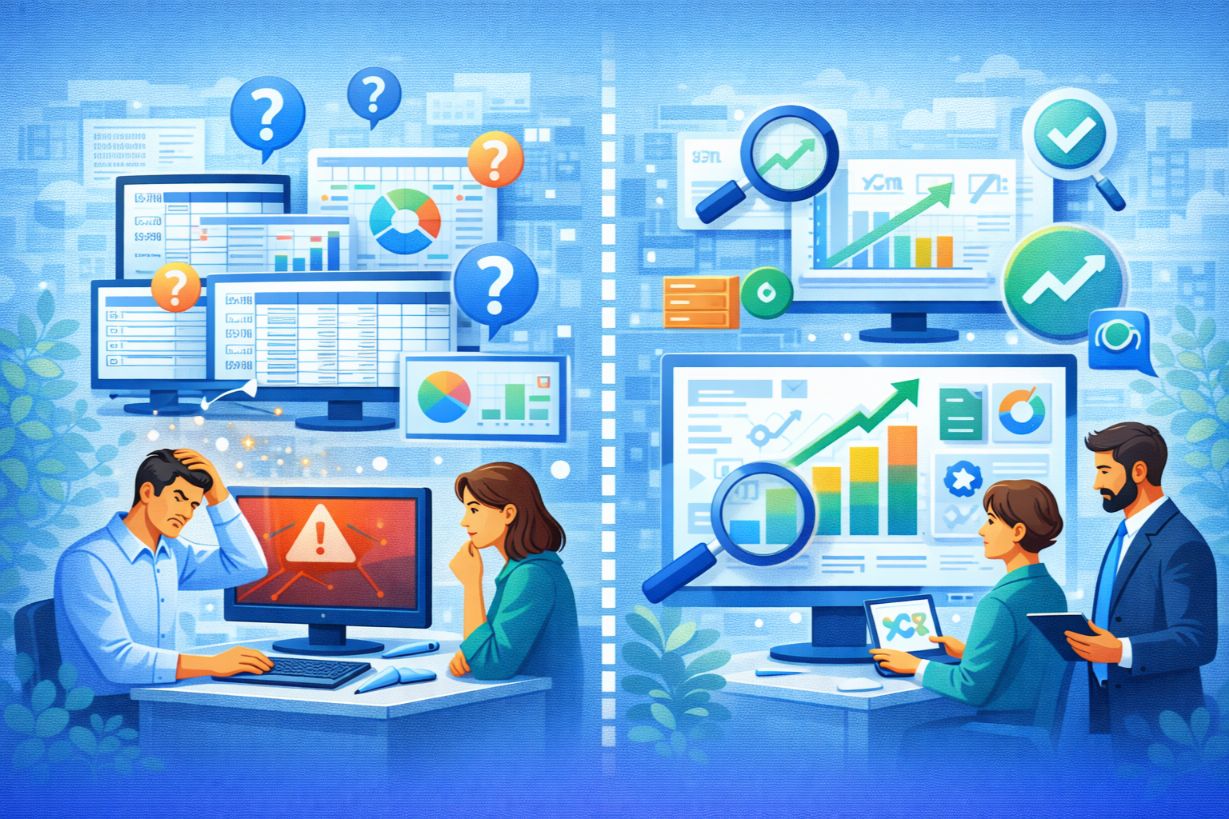
Yet despite having more data than ever, many SMBs still struggle to answer basic questions like:
- What’s driving profitability?
- Where are we losing efficiency?
- What should we focus on next?
The problem isn’t lack of data — it’s lack of actionable insight.
In this article, we’ll explore why SMBs fail to turn data into action, and how to build an analytics approach that actually drives results.
Why More Data Doesn’t Equal Better Decisions
Collecting data is easy. Using it well is not.
Common reasons SMBs fail include:
- Too many metrics
- Poor data quality
- Disconnected systems
- No clear ownership
- Analysis without action
Without focus, data becomes noise.
What Makes an Insight “Actionable”?
Actionable insights:
- Are timely
- Are relevant to a decision
- Clearly suggest next steps
If data doesn’t lead to action, it’s just reporting.
The Difference Between Reporting and Insight
Reports tell you what happened.
Insights tell you why it happened — and what to do next.
SMBs must move beyond static reports to dynamic insights.
Common Analytics Mistakes SMBs Make
1. Tracking Too Many KPIs
More KPIs create confusion.
Focus on:
- Revenue drivers
- Cost drivers
- Operational bottlenecks
Less is more.
2. Relying on Lagging Indicators
Historical data shows the past — not the future.
Leading indicators help SMBs:
- Anticipate issues
- Plan proactively
Predictive analytics matter.
3. No Ownership or Accountability
If no one owns analytics, no one acts on it.
Clear ownership ensures insights lead to decisions.
4. Insights That Aren’t Integrated Into Workflows
Analytics must:
- Be visible
- Be easy to access
- Align with daily decision-making
Otherwise, they’re ignored.
Building an Analytics Framework That Drives Action
1. Start with Business Questions
Ask:
- What decisions do we struggle with?
- Where do we lack clarity?
Let questions drive analytics — not tools.
2. Align Metrics to Outcomes
Every metric should connect to:
- Growth
- Efficiency
- Customer experience
- Risk reduction
If it doesn’t — cut it.
3. Use Dashboards Designed for Decision-Makers
Dashboards should:
- Highlight exceptions
- Surface trends
- Prompt action
Executives don’t need raw data — they need insight.
4. Combine Data Sources for Context
True insights come from combining:
- Financial data
- Operational data
- Customer data
Context creates clarity.
Turning Insights Into Decisions
Analytics must feed decisions such as:
- Budget adjustments
- Staffing changes
- Process improvements
- Investment priorities
Decision frameworks ensure data drives action.
The Role of AI in Making Analytics Actionable
AI helps SMBs by:
- Identifying anomalies
- Highlighting trends automatically
- Providing predictive insights
AI reduces manual analysis and speeds decisions.
Analytics in Daily Operations
Analytics shouldn’t live in monthly reports.
Embed insights into:
- Weekly leadership meetings
- Operational reviews
- Performance management
Consistency builds data-driven culture.
How Managed IT and BI Partners Help SMBs Succeed
Partners help SMBs:
- Define KPIs
- Integrate systems
- Design dashboards
- Secure data
This accelerates insight delivery.
Real-World Example: From Data Overload to Clarity
A service-based SMB:
- Tracks dozens of metrics
- Feels overwhelmed
After refining analytics:
- Focuses on 5 KPIs
- Identifies profitability gaps
- Improves margins
Less data — more insight.
Measuring ROI from Analytics Initiatives
ROI comes from:
- Faster decisions
- Reduced waste
- Improved performance
Analytics investments should pay for themselves.
Future Trends in Actionable Analytics
Emerging trends include:
- Embedded analytics
- Natural language insights
- Automated recommendations
Analytics is becoming proactive — not reactive.
How SMBs Can Get Started
Step 1: Identify Key Decisions
Step 2: Define Supporting Metrics
Step 3: Clean and Integrate Data
Step 4: Build Simple Dashboards
Step 5: Review and Act Regularly
Action creates value.
Insights Only Matter When Used
Data is a resource — insight is an advantage.
For SMBs, turning analytics into action:
- Improves performance
- Reduces uncertainty
- Supports growth
The goal isn’t more data.
It’s better decisions.
Struggling to get real value from your business data?
Schedule a data analytics assessment to uncover actionable insights that drive results.