
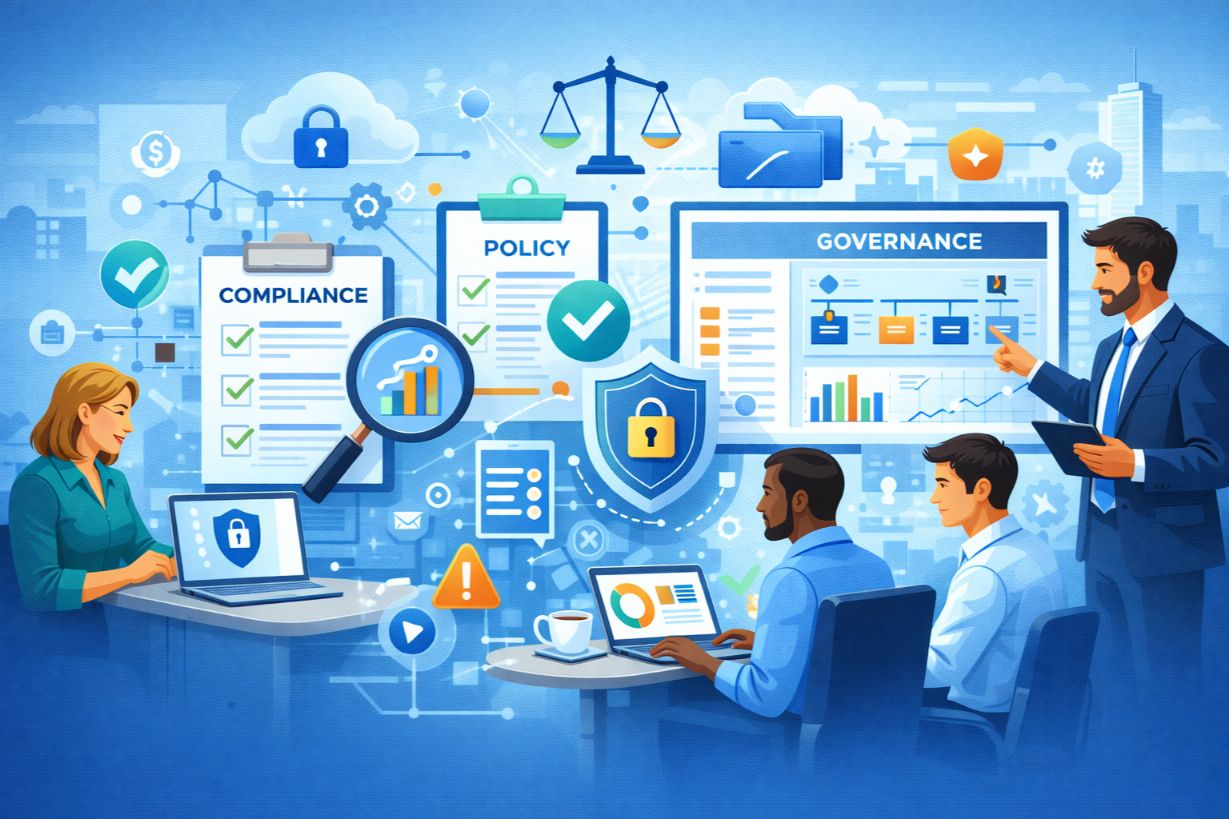
Why IT Compliance and Governance Are Becoming Non-Negotiable for SMBs
For many years, IT compliance and governance were seen as concerns only large enterprises had to worry about.
That era is over.
Today, small and mid-sized businesses face increasing regulatory pressure, customer security requirements, and cyber risk — and the consequences of non-compliance can be devastating.
In this article, we’ll explain what IT compliance and governance really mean for SMBs, why they matter more than ever, and how businesses can manage risk without drowning in complexity.
What Is IT Compliance vs. IT Governance?
While closely related, compliance and governance serve different roles.
IT Compliance
Ensures that your business:
- Meets regulatory requirements
- Follows industry standards
- Protects sensitive data
Examples include data protection laws, industry regulations, and customer security mandates.
IT Governance
Defines:
- How IT decisions are made
- Who is accountable
- How risk is managed
- How technology supports business goals
Governance ensures IT supports the business — not just reacts to problems.
Why SMBs Are Facing More Compliance Pressure
Compliance is no longer optional for SMBs.
Drivers include:
- Data privacy regulations
- Cyber insurance requirements
- Vendor and customer security audits
- Industry-specific regulations
Even small businesses are now expected to demonstrate strong security and governance practices.
The Real Risks of Non-Compliance
Non-compliance isn’t just about fines.
Consequences Include:
- Financial penalties
- Loss of contracts
- Cyber insurance denial
- Legal exposure
- Reputational damage
For SMBs, these risks can threaten long-term survival.
Common Compliance Areas Affecting SMBs
Data Protection & Privacy
Regulations require businesses to:
- Protect customer data
- Control access
- Report breaches
Even small data leaks can trigger major consequences.
Cybersecurity Standards
Many frameworks require:
- Multi-factor authentication
- Endpoint protection
- Incident response plans
- Regular risk assessments
Cybersecurity is now deeply tied to compliance.
Industry-Specific Regulations
Industries such as:
- Healthcare
- Finance
- Legal
- Manufacturing
Face additional compliance obligations.
IT Risk Management: The Foundation of Compliance
Compliance starts with understanding risk.
IT risk management involves:
- Identifying vulnerabilities
- Assessing impact
- Prioritizing controls
- Monitoring continuously
Without risk management, compliance becomes reactive and ineffective.
Key Components of Effective IT Governance for SMBs
1. Clear Policies & Standards
Documented policies define:
- Acceptable use
- Data handling
- Security requirements
They provide clarity and accountability.
2. Defined Roles & Responsibilities
Governance requires knowing:
- Who owns IT decisions
- Who manages risk
- Who responds to incidents
Accountability prevents gaps.
3. Technology Oversight
Governance ensures:
- Technology investments align with business goals
- Security is built into decisions
- Systems are reviewed regularly
4. Continuous Monitoring & Review
Compliance is not a one-time project.
Ongoing monitoring ensures:
- Controls remain effective
- New risks are addressed
- Documentation stays current
The Role of Cybersecurity in Compliance
Cybersecurity controls are now the backbone of compliance.
These include:
- Endpoint protection
- Network security
- Email filtering
- Access controls
Without cybersecurity, compliance collapses.
How Managed IT Services Support Compliance & Governance
Most SMBs lack internal compliance expertise.
Managed service providers help by:
- Conducting risk assessments
- Implementing security controls
- Managing documentation
- Supporting audits
This simplifies compliance while reducing risk.
Compliance and Cyber Insurance: A Growing Connection
Cyber insurance providers now require:
- Strong security controls
- Documented policies
- Incident response plans
Poor governance can lead to:
- Higher premiums
- Denied claims
Insurance and compliance now go hand in hand.
Real-World Example: Compliance Saves a Contract
A small technology vendor is asked to complete a security questionnaire:
- MFA required
- Incident response plan required
- Data protection controls required
With governance in place:
- Requirements met quickly
- Contract secured
Without it, the deal could have been lost.
Common Compliance Myths That Hurt SMBs
❌ “We’re Too Small to Be Regulated”
SMBs are increasingly targeted.
❌ “Compliance Is Just Paperwork”
It directly reduces risk.
❌ “Compliance Equals Security”
Compliance supports security — but doesn’t replace it.
How SMBs Can Build Compliance Without Overhead
Step 1: Understand Applicable Requirements
Step 2: Conduct a Risk Assessment
Step 3: Implement Core Security Controls
Step 4: Document Policies
Step 5: Review Regularly
Start with essentials — expand as needed.
Governance Enables Smarter Technology Decisions
Good governance helps SMBs:
- Avoid risky investments
- Align IT with growth
- Manage vendors effectively
IT becomes strategic — not chaotic.
Compliance Is Now a Business Imperative
Compliance, risk management, and governance are no longer optional — even for SMBs.
Organizations that take a proactive approach:
- Reduce risk
- Build trust
- Win more business
- Protect long-term growth
In today’s environment, strong governance is a competitive advantage.
Unsure if your business meets current compliance requirements?
Schedule a risk and compliance assessment to identify gaps and reduce exposure.