
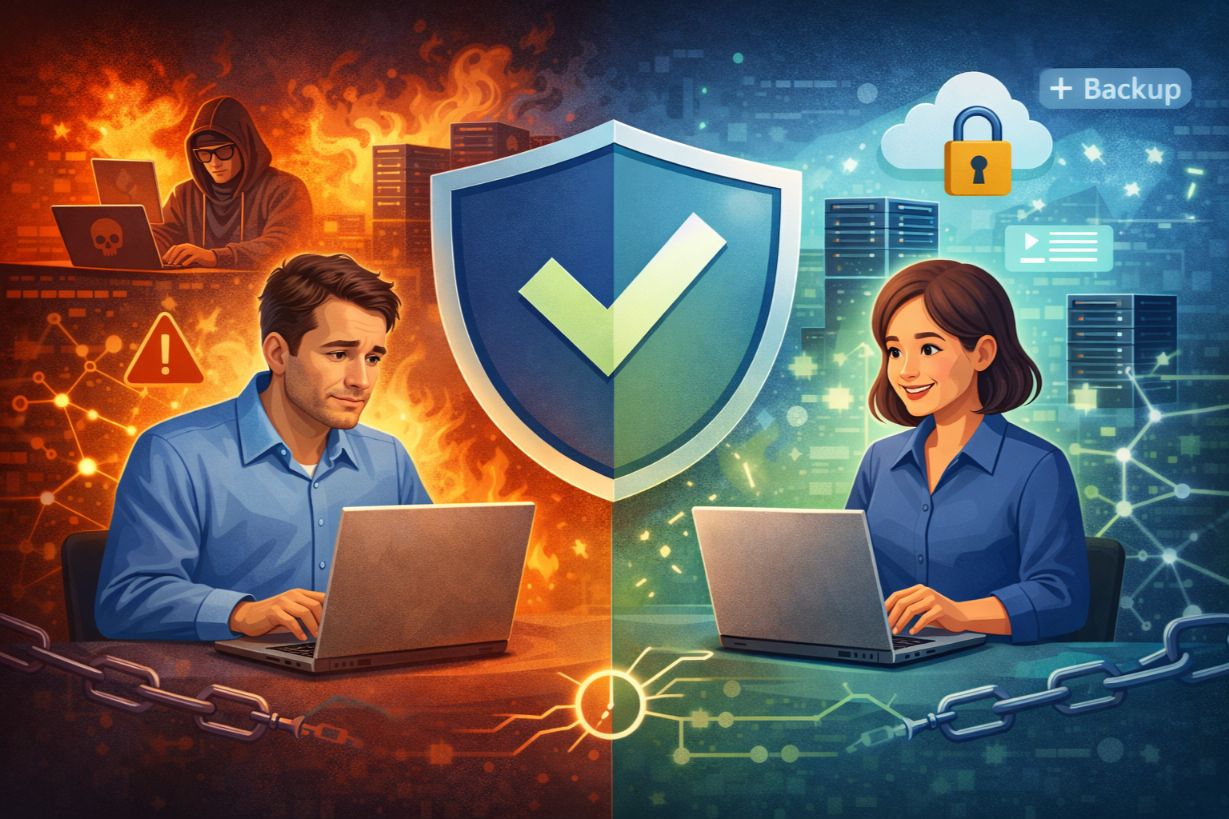
Why Cyber Resilience Matters More Than Cybersecurity for SMBs
For years, cybersecurity focused on one goal: prevention.
Firewalls, antivirus software, and security awareness training all aim to keep attackers out. But today’s threat landscape has changed.
The uncomfortable truth is:
Prevention alone is no longer enough.
For SMBs, the real differentiator is cyber resilience — the ability to withstand attacks, respond quickly, and recover with minimal disruption.
In this article, we’ll explore why cyber resilience matters more than traditional cybersecurity for SMBs, and how businesses can build resilience without enterprise-level resources.
Cybersecurity vs. Cyber Resilience: What’s the Difference?
Cybersecurity
Focuses on:
- Preventing attacks
- Reducing vulnerabilities
Cyber Resilience
Focuses on:
- Preparation
- Detection
- Response
- Recovery
Resilience assumes attacks will happen — and plans accordingly.
Why SMBs Must Assume Breach
Attackers target SMBs because:
- Security controls are weaker
- Response capabilities are limited
- Ransom payments are more likely
Resilient SMBs plan for disruption — not perfection.
The Business Impact of Poor Cyber Resilience
When resilience is weak:
- Downtime lasts longer
- Data loss is greater
- Recovery costs increase
- Customer trust erodes
Cyber incidents become existential threats.
Core Components of a Cyber Resilience Strategy
1. Strong Preventive Security
Resilience starts with good security:
- MFA
- Endpoint protection
- Email security
Prevention still matters — but it’s only the first layer.
2. Early Detection & Monitoring
The faster threats are detected:
- The less damage occurs
- The faster recovery begins
24/7 monitoring is essential.
3. Incident Response Planning
Resilient SMBs know:
- Who responds
- What steps to take
- How to communicate
Plans reduce chaos during incidents.
4. Backup & Recovery Capabilities
Recovery defines resilience.
Resilient backups:
- Are isolated
- Are immutable
- Enable rapid restoration
Recovery without ransom is the goal.
5. Business Continuity Planning
Cyber incidents are business disruptions.
Continuity planning ensures:
- Critical operations continue
- Employees know what to do
- Customers are supported
Why Cyber Insurance Isn’t a Substitute for Resilience
Insurance helps with costs — not operations.
Without resilience:
- Claims may be denied
- Recovery may stall
- Reputation damage persists
Insurers increasingly require resilience controls anyway.
Cyber Resilience as a Leadership Responsibility
Resilience is not just an IT issue.
Leadership must:
- Prioritize investment
- Define risk tolerance
- Support preparedness
Resilience protects the business — not just systems.
How SMBs Can Build Cyber Resilience Incrementally
SMBs don’t need massive programs.
A phased approach includes:
- Strengthen prevention
- Add detection and monitoring
- Implement resilient backups
- Develop response plans
- Test and improve
Small steps build big protection.
The Role of Managed Security Services in Resilience
Managed providers help SMBs:
- Monitor continuously
- Respond quickly
- Recover effectively
This brings enterprise-grade resilience within reach.
Real-World Example: Resilience in Action
An SMB experiences ransomware:
- Systems encrypted
- Operations disrupted
With resilience:
- Threat detected early
- Systems isolated
- Data restored
- Business resumes
Without resilience, the outcome could be fatal.
Common Myths About Cyber Resilience
❌ “Resilience Means We Expect Failure”
It means we plan for reality.
❌ “Resilience Is Too Expensive”
Downtime is more expensive.
❌ “Our IT Team Can Handle It”
Incidents require preparation — not heroics.
Measuring Cyber Resilience
Metrics include:
- Detection time
- Recovery time
- Data loss
- Business impact
What gets measured gets improved.
Future Trends in Cyber Resilience
Emerging trends include:
- Automated incident response
- AI-driven detection
- Integrated resilience platforms
Resilience will become standard practice.
How SMBs Can Start Building Resilience Today
Step 1: Assess Current Capabilities
Step 2: Identify Critical Business Functions
Step 3: Improve Detection & Backup
Step 4: Develop Response Plans
Step 5: Test Regularly
Preparedness reduces panic.
Final Thoughts: Resilience Is the New Standard
Cybersecurity will never be perfect.
For SMBs, success isn’t about avoiding every attack — it’s about recovering quickly and continuing operations.
Cyber resilience transforms security from fear into confidence.
Unsure how resilient your business would be after a cyberattack?
Schedule a cyber resilience assessment to evaluate readiness and recovery capabilities.