
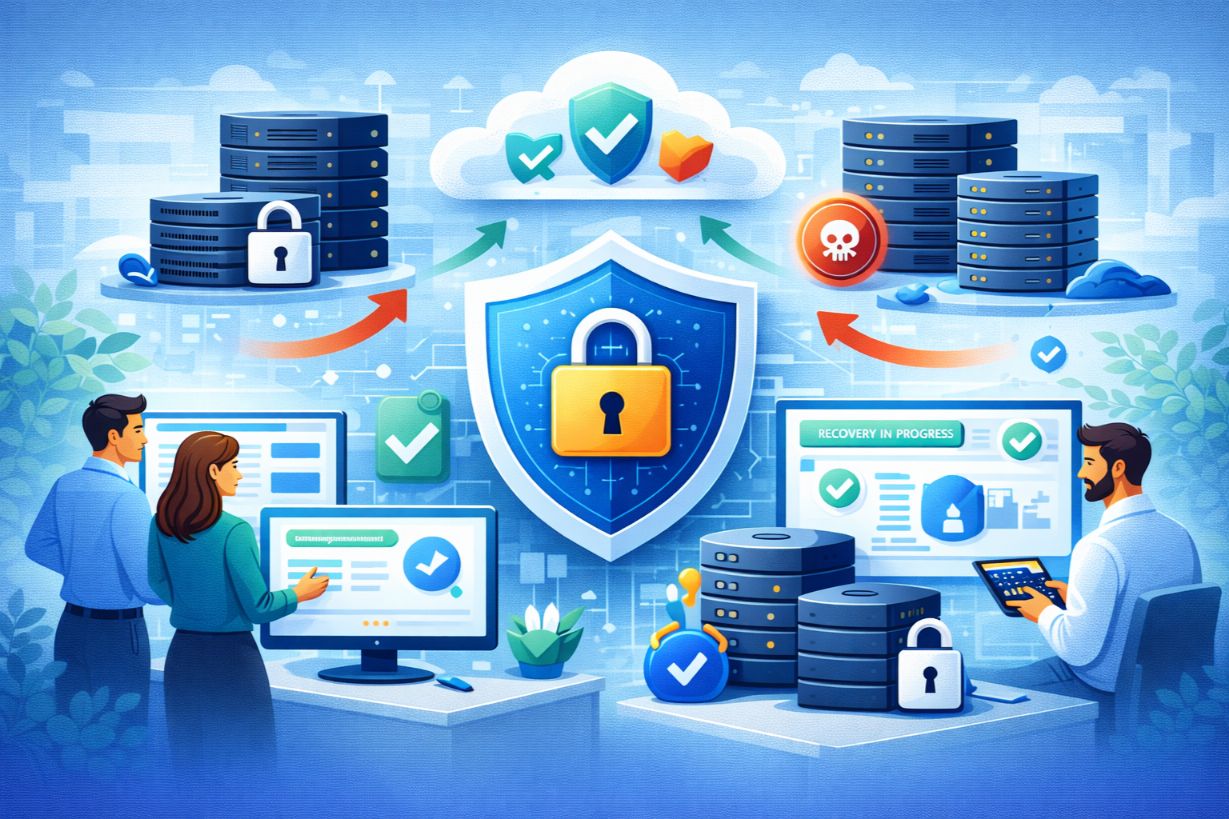
How SMBs Can Build Ransomware-Resilient Backup and Recovery Strategies
How SMBs Can Build Ransomware-Resilient Backup and Recovery Strategies
Ransomware has fundamentally changed what backup and disaster recovery mean.
It’s no longer enough to simply have backups.
Backups must now be secure, isolated, and resilient against attack.
For small and mid-sized businesses, ransomware represents one of the most serious threats to survival. The good news is that with the right ransomware-resilient backup strategy, SMBs can recover quickly — without paying criminals.
This article explains how SMBs can design backup and recovery systems that stand up to modern ransomware attacks.
Why Traditional Backup Strategies Are Failing SMBs
Many SMBs still rely on outdated backup approaches.
Common weaknesses include:
- Backups stored on the same network
- No protection against deletion or encryption
- Infrequent backup schedules
- Untested recovery processes
Modern ransomware specifically targets these weaknesses.
What “Ransomware-Resilient” Really Means
Ransomware-resilient backups must:
- Be isolated from production systems
- Be protected from modification or deletion
- Allow rapid, predictable recovery
Resilience focuses on recoverability, not just data storage.
Key Components of a Ransomware-Resilient BCDR Strategy
1. Immutable Backups
Immutable backups cannot be altered or deleted — even by administrators.
This ensures:
- Ransomware cannot encrypt backups
- Malicious insiders can’t erase recovery points
Immutability is now a cornerstone of modern recovery.
2. Offsite and Cloud-Based Backup Storage
Offsite storage protects against:
- Local attacks
- Physical disasters
- Network-wide compromise
Cloud storage provides geographic isolation and redundancy.
3. Frequent, Automated Backup Schedules
Infrequent backups increase data loss.
Best practices include:
- Multiple daily backups
- Automated scheduling
- Monitoring for backup failures
The goal is minimizing recovery point objectives (RPOs).
4. Rapid Recovery Capabilities
Backups are useless if recovery takes days.
Modern solutions allow:
- Instant file recovery
- Full system restores
- Cloud-based failover
Speed determines business survival.
5. Regular Backup Testing
Untested backups often fail.
Testing ensures:
- Data integrity
- Recovery processes work
- Staff know what to do
Testing turns backups into confidence.
Backup vs. Business Continuity: Why Both Matter
Backups restore data.
Business continuity keeps operations running.
Effective strategies integrate:
- Data recovery
- System availability
- Remote access
Together, they reduce downtime and disruption.
The Role of Zero Trust in Backup Security
Zero trust principles improve backup protection by:
- Limiting access
- Enforcing least privilege
- Monitoring behavior
Backups should never be universally accessible.
Ransomware Recovery Without Paying the Ransom
Paying ransom:
- Encourages attackers
- Doesn’t guarantee recovery
- Creates legal and compliance risks
Resilient backups provide a safe alternative.
How Managed BCDR Services Improve Ransomware Resilience
Managed providers help SMBs:
- Design resilient architectures
- Monitor backup health
- Perform recovery testing
- Respond during incidents
This removes complexity during crises.
Real-World Example: Ransomware Recovery Done Right
A 22-employee firm:
- Hit by ransomware overnight
- Systems encrypted
With resilient backups:
- Systems restored same day
- Data loss minimal
- No ransom paid
Without them, the outcome could have been catastrophic.
Compliance, Insurance & Backup Resilience
Cyber insurance providers increasingly require:
- Immutable backups
- Documented recovery plans
- Regular testing
Resilience supports compliance and insurability.
Common Backup Myths That Increase Risk
❌ “Cloud Backups Are Automatically Secure”
Security depends on configuration.
❌ “We’ll Recover Manually If Needed”
Manual recovery is slow and unreliable.
❌ “Testing Isn’t Necessary”
Untested backups often fail when needed most.
How SMBs Can Build a Resilient Backup Strategy
Step 1: Assess Current Backup Capabilities
Step 2: Identify RPO and RTO Requirements
Step 3: Implement Immutable, Offsite Backups
Step 4: Test Recovery Regularly
Step 5: Monitor Continuously
Preparedness prevents panic.
Future Trends in Ransomware Resilience
Emerging trends include:
- AI-driven attack detection
- Automated recovery orchestration
- Deeper integration with security platforms
Resilience continues to evolve alongside threats.
Backups Are Your Last Line of Defense
When prevention fails, recovery determines survival.
For SMBs, ransomware-resilient backup strategies:
- Protect data
- Reduce downtime
- Eliminate ransom payments
- Preserve business continuity
Prepared businesses recover. Unprepared ones may not.
Not sure if your backups would survive a ransomware attack?
Schedule a ransomware resilience assessment to evaluate recovery readiness.