How Predictive Analytics Helps SMBs Plan Smarter and Compete Stronger
Most SMB decisions are still made by looking backward.
Leaders review:
- Last quarter’s revenue
- Historical costs
- Past performance metrics
Then they plan forward — hoping the future looks like the past.
That approach no longer works.
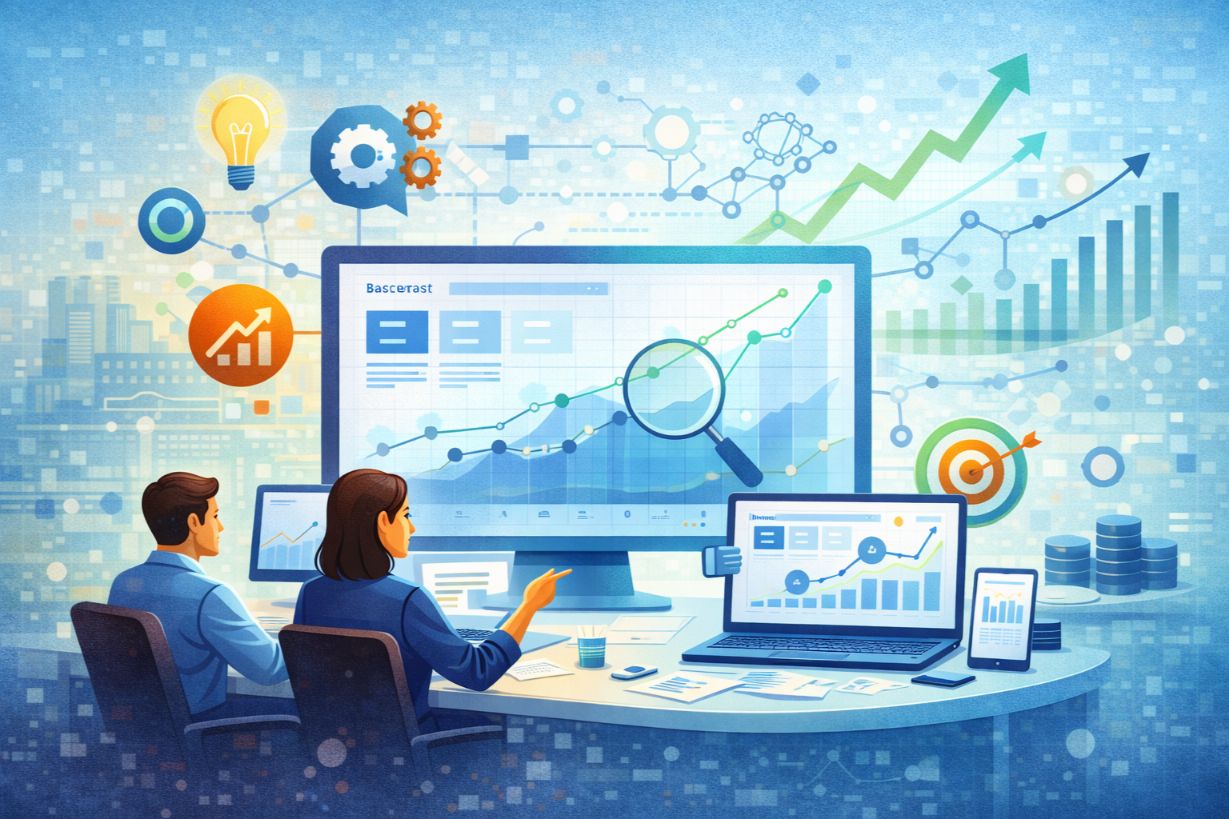
Today’s most competitive SMBs use predictive analytics to anticipate trends, reduce uncertainty, and make decisions before problems or opportunities fully emerge.
In this article, we’ll explain how predictive analytics works, why it’s now accessible to SMBs, and how it transforms planning and competitiveness.
What Is Predictive Analytics?
Predictive analytics uses:
- Historical data
- Statistical models
- Machine learning
To forecast future outcomes, such as:
- Sales demand
- Customer churn
- Cash flow
- Operational risk
It turns data into foresight.
Why Traditional Reporting Isn’t Enough Anymore
Descriptive analytics answers:
“What happened?”
Predictive analytics answers:
“What’s likely to happen next?”
In volatile markets, hindsight isn’t enough.
Why Predictive Analytics Is No Longer Just for Enterprises
Advances in:
- Cloud computing
- AI tools
- Self-service BI platforms
Have made predictive analytics affordable and practical for SMBs.
You no longer need data scientists to benefit.
Key Business Areas Where Predictive Analytics Delivers Value
Sales Forecasting
Predictive models:
- Identify demand patterns
- Improve revenue forecasting
- Reduce missed opportunities
Sales planning becomes proactive.
Financial Planning & Cash Flow Management
Predictive analytics helps:
- Anticipate cash shortages
- Model scenarios
- Improve budgeting accuracy
Finance moves from reactive to strategic.
Customer Retention & Churn Prediction
Predictive insights reveal:
- Which customers are likely to leave
- What behaviors signal risk
Retention efforts become targeted and timely.
Operational Planning
Analytics forecast:
- Staffing needs
- Inventory levels
- Capacity requirements
Operations become more efficient and resilient.
Predictive Analytics vs Guesswork
Without predictive analytics:
- Decisions rely on intuition
- Risks are discovered late
- Opportunities are missed
With predictive analytics:
- Uncertainty shrinks
- Confidence increases
Data becomes a competitive weapon.
What Data SMBs Need for Predictive Analytics
You don’t need “big data.”
Most SMBs already have what’s required:
- Sales history
- Financial data
- CRM data
- Operational metrics
The value comes from connecting and analyzing, not collecting more.
The Role of AI in Predictive Analytics
AI enhances predictive analytics by:
- Identifying complex patterns
- Improving forecast accuracy
- Adapting models over time
AI reduces manual modeling effort.
Common SMB Barriers to Predictive Analytics
❌ “Our Data Isn’t Perfect”
It doesn’t need to be.
❌ “We’re Too Small”
Smaller datasets are often easier to model.
❌ “It’s Too Complex”
Modern tools simplify deployment.
How Predictive Analytics Supports Strategic Planning
Predictive insights help leaders:
- Model growth scenarios
- Evaluate investment decisions
- Anticipate risk
Strategy becomes evidence-based.
From Insight to Action: Making Predictions Useful
Predictions only matter if they:
- Inform decisions
- Trigger actions
- Are reviewed regularly
Integration into planning cycles is critical.
How Managed IT and BI Partners Accelerate Adoption
Partners help SMBs:
- Prepare data
- Select forecasting tools
- Build predictive models
- Interpret results
This shortens time-to-value.
Real-World Example: Predictive Planning in Action
An SMB:
- Struggles with cash flow volatility
After implementing predictive analytics:
- Forecasts revenue accurately
- Adjusts spending proactively
- Avoids cash crunches
Foresight replaces stress.
Measuring ROI from Predictive Analytics
ROI appears through:
- Fewer surprises
- Better forecasts
- Reduced waste
- Improved margins
Planning improves — costs fall.
Future Trends in Predictive Analytics for SMBs
Emerging trends include:
- Real-time forecasting
- Natural language predictions
- Embedded predictive insights
Predictive analytics will become standard.
How SMBs Can Get Started with Predictive Analytics
Step 1: Identify Planning Pain Points
Step 2: Consolidate Key Data
Step 3: Start with Simple Forecasts
Step 4: Validate and Improve
Step 5: Embed into Planning
Progress beats perfection.
The Future Belongs to Predictive Businesses
Reactive planning is risky.
For SMBs, predictive analytics:
- Reduces uncertainty
- Improves confidence
- Strengthens competitiveness
The ability to see what’s coming is one of the most powerful advantages a business can have.
Want clearer visibility into what’s ahead for your business?
Schedule a predictive analytics assessment to explore forecasting and planning opportunities.